
Years ago, in a Polish deli in Seattle, I met a drink that haunted me. It was Lithuanian, it was brown, and it was made out of literal bread crumbs. Almost like someone wrung out a loaf of rye bread and bottled whatever dripped out. That drink was Gubernija kvass. I didn’t love it at the time… but I also didn’t realize I was drinking something that had literally kept people alive for over 1,000 years. So today, I’m addressing my ignorance and revisiting Kvass.
History of Kvass
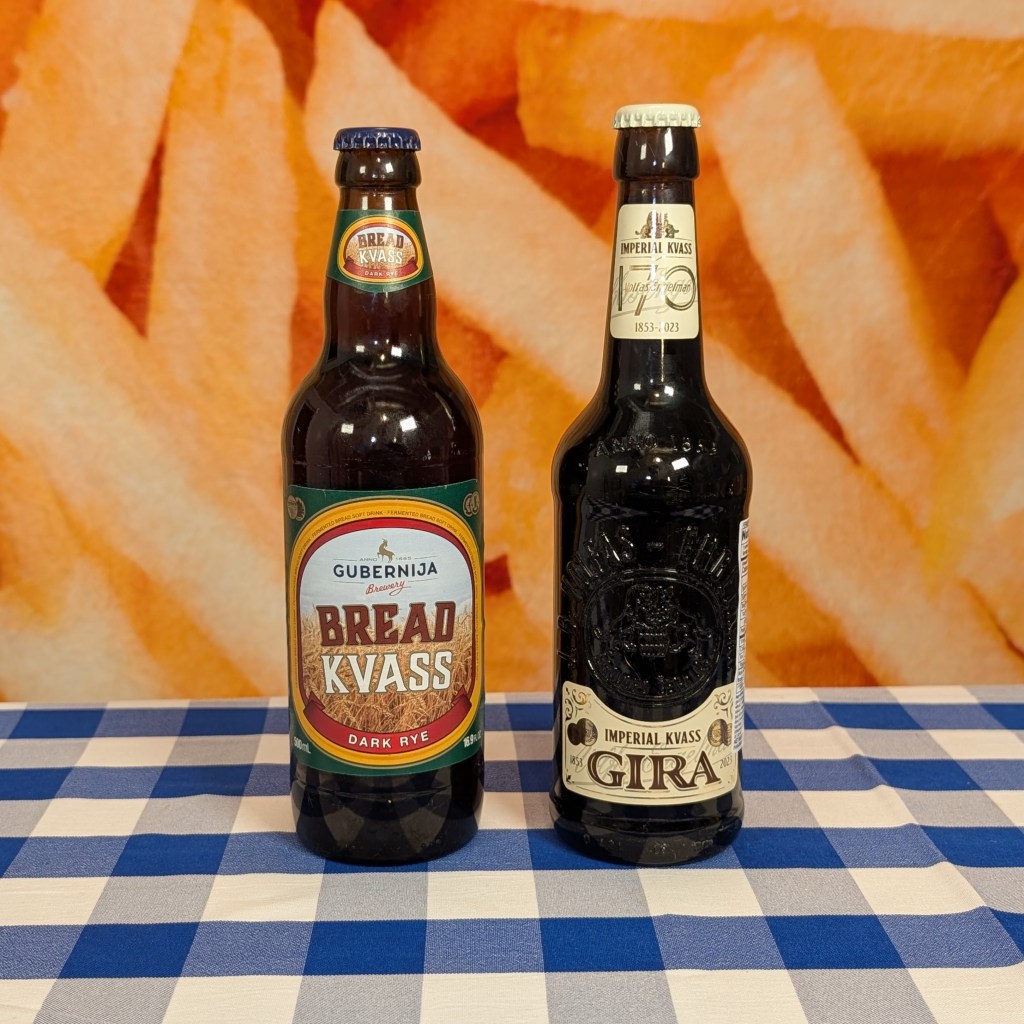
In today’s post I’m going to review two different brands of Lithuanian Kvass, but first I’d like to give some background and cultural context to the soft drink. You can find the drink throughout Eastern Europe, but in Lithuania it’s called gira, Russians call it kvas, and Poles call it “kwas chlebowy”. It’s basically the same thing. As I mentioned above, kvass is made with breadcrumbs. The full ingredients are generally water, rye bread crumbs (or a rye “wort”), wild yeast, and sugar. This mixture ferments for a few days and produces a lightly carbonated, slightly tangy, probiotic, and pleasantly malty beverage typically with less than 0.5% alcohol. It won’t get you drunk, but there are other benefits.
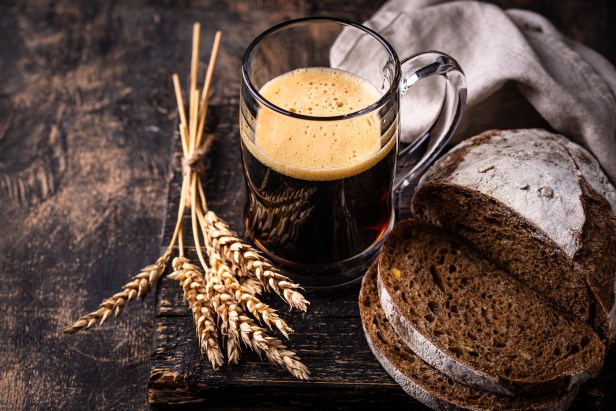
The lactic acid bacteria and alcohol from fermentation in kvass kills harmful bacteria which means that it was historically safer to drink than water. This made the beverage critically important to public health before modern water purification emerged. There are historical records dating back to the 10th century that mention kvass, and it was a daily part of life for Eastern Europeans over much of the last 1,000 years. Every family had their own bucket or barrel of kvass, and there were always vendors in the towns and street markets. I guess the risk of picking up communal-mug cooties was still better than chugging pond water flavored with protozoan nightmares.

Eventually kvass production was commercialized and several breweries were formed. Two prominent Lithuanian breweries (Gubernija and Volfas Engelman) were actually founded in the 1800s and are still producing kvass today despite myriad political and economic challenges. Gubernija is rumored to have started production back in 1665 but were officially established in 1867. Volfas Engelman began as two separate breweries (Volfas established in 1853 and Engelman in 1860), but were combined as Volfas Engelman in 1927. Lithuania was occupied off and on by Germany and Russia/Soviet Union throughout most of the 20th century leading to both breweries becoming nationalized, and then re-privatized (Volfas Engelman in 1994 and Gubernija in 1999). Volfas Engelman was renamed as Ragutis during the period of Soviet nationalization, but they reclaimed their historical name in 2011.


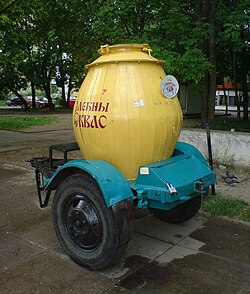
Fun fact: the Soviet Union mass-produced kvass and distributed it in giant yellow street tankers (kvass tanks). Anyone growing up during this time would remember these trailers in the street.
How Do They Taste?
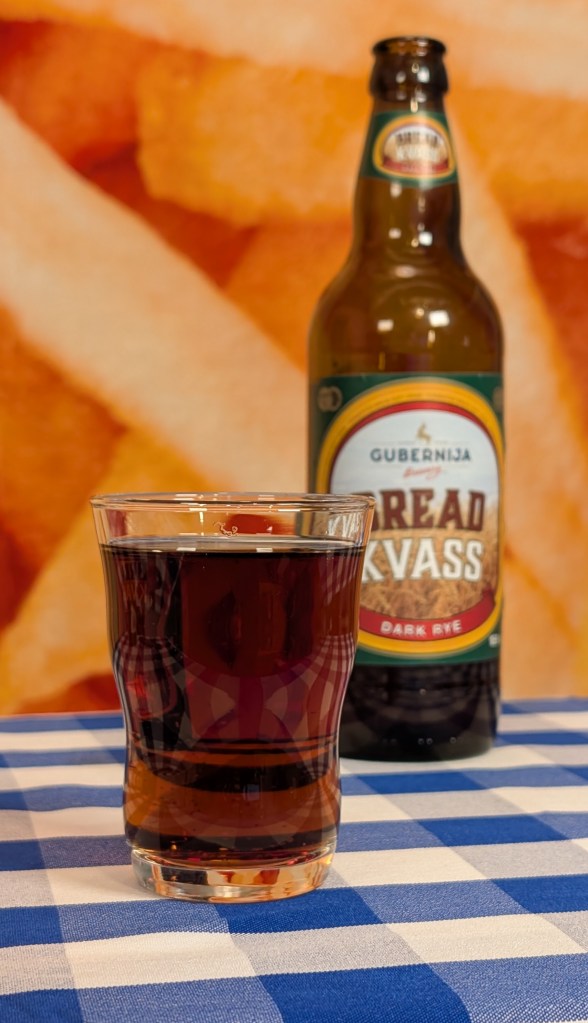
Gubernija seems to be the most traditional and still uses toasted rye breadcrumbs as the base of the soft drink. It’s a pale brown-yellow color and looks and smells similar to a light beer. It tastes surprisingly smooth and light with malty and sour notes, and it finishes slightly sweet and clean. The carbonation is noticeable, but not aggressive. I liked it more than I thought I would! It definitely tastes like rye bread, but (obviously) watered down.


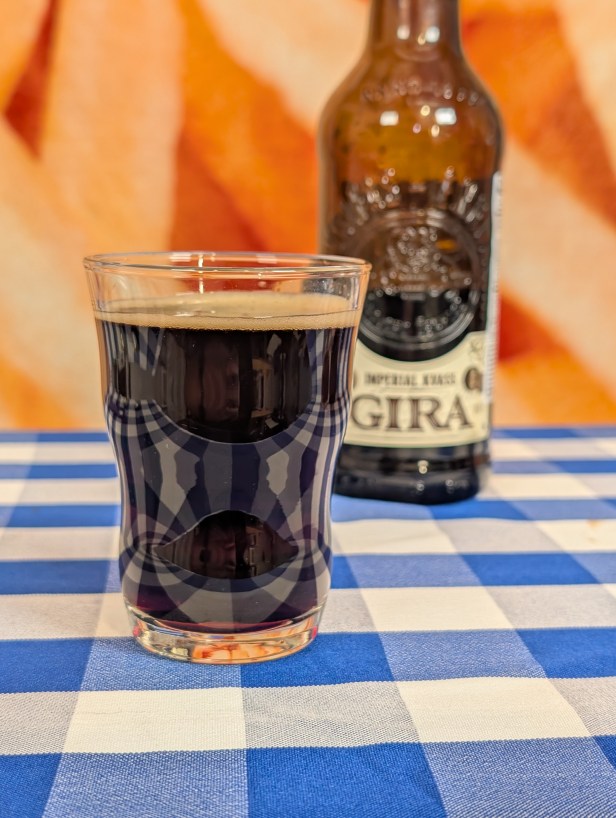
Volfas Engelman actually makes two different varieties of kvass, but I only found one. The Smetoniška variety is labeled as “traditional”, while the Imperial variety is probably richer and more pronounced. Please correct me if I’m wrong. I could only find a bottle of the Imperial and it was much darker than the Gubernija, tasted more sour, more malty, and had a thicker texture with a foaming head. This was more approachable than expected—dense and sour, yes, but not the ‘liquid pumpernickel’ I feared. Comparatively not as refreshing or clean as the Gubernija.


Conclusion
Lithuanian kvass (or gira) might not replace your Diet Coke habit, but it kept generations of Eastern Europeans alive and hydrated for centuries. If you want to hear more about historical drinks, or force me to drink something sketchy, tell me what to try next! Or, click here for reviews of other historical beverages.

 Sodafry