
Before I get in trouble with the fine people at Tampa’s finest Australian themed steakhouse, this is not actually a “Bloomin’ Onion”, but I’m using the term here because that’s what most people will recognize it as. Officially, this dish at Canlis is the “Royal White Sturgeon Caviar” served with “Fried Walla Walla onion with goat cheese”. It’s the most eye catching (and expensive) item on their lounge menu, and it’s been on my bucket list for a while. Throughout the rest of 2025 I’m going to work on a series of posts that focus on extremely elevated versions of comfort food staples. I’ll call it “The Highest of Lows”. This is entry number 1.

The Food
Before I get too far into my review of the caviar dish, let me set the table. Canlis is considered to be Seattle’s first fine dining restaurant. While it’s gone through a few creative evolutions over the years, it’s always retained its reputation for impeccable service, a beautiful ambiance, and an inspired menu. The typical dinner service these days is a tasting menu with 7 to 8 courses that will cost around $200 per person. You’re able to choose an option for a few of those courses, but most of the experience is set by the chef. It’s very elegant, but not pretentious. The team is also not above special events that focus on smash burgers or turning the entire restaurant into Barbie’s Dreamhouse. They’ve also been extremely quick to respond to emergencies in the community and stepped in to help where they can. You’ll typically need a reservation for the dinner service, but they do have limited availability for drop-ins at the lounge where you can grab a drink or order food from the à la carte lounge menu. This post is specifically about my experience in the lounge.
My review here isn’t to brag about spending $125 on a fried onion. It’s also not intended to jeer at the elitist hypocrisy of fine dining. I valued the experience as a way to explore what happens when you elevate something as far as you can, and what is gained or lost by doing so. It may not be worth it to you, and that’s okay. I hope you enjoy the insights, regardless.
Scallop Toast
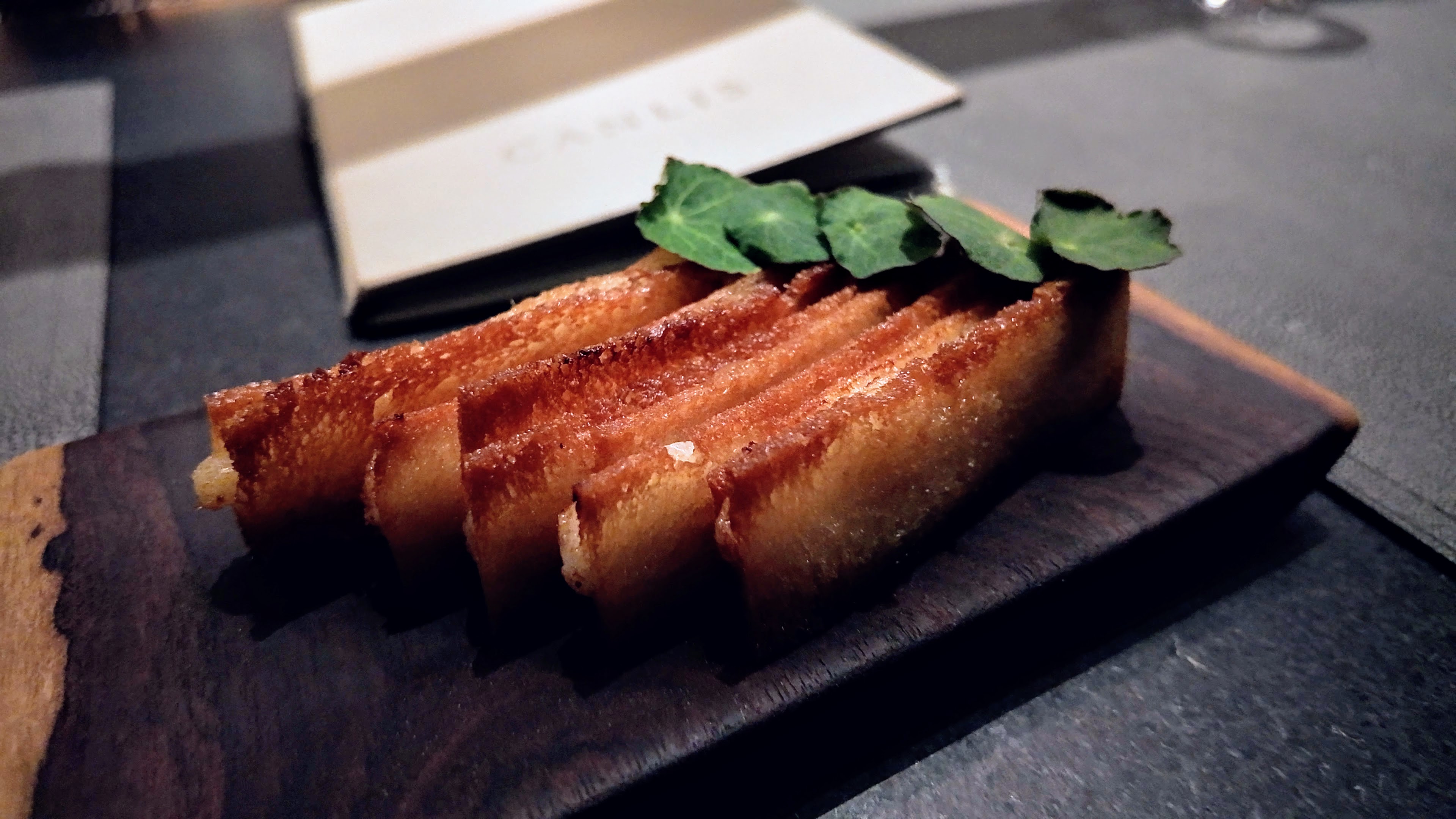
I ordered a couple of items on this visit. During a previous dinner I had a very small taste of their Scallop Toast and I was thrilled to see that on the lounge menu. As I understand it, this is a play on the concept of a shrimp toast that’s pretty common on dim sum menus. Instead of layering a minced shrimp paste on toast, this is a scallop paste layered in some sort of savory/miso wafer. It’s incredibly delicate, incredibly savory, and an explosion of flavor. There’s a lot of textural contrast between the crispy wafer and the creamy paste, but there’s also layers and layers of umami richness that coat your mouth. This was a real highlight and a great way to start the meal. $18 for 5 pieces.
Bloomin’ Onion – Royal White Sturgeon Caviar

I’ll repeat, this is not a Bloomin’ Onion. However, Outback Steakhouse’s signature appetizer is the inspiration. The reason this dish is $125 is obviously due to the 1 ounce of caviar served alongside the fried onion. I’m not a caviar expert, but this specific sturgeon variety was sourced from a sustainable Idaho provider. Canlis served it in the tin, but please note that you’re only receiving 1 ounce of the caviar on top of a bed of creamy goat cheese. It’s a beautiful presentation, but I didn’t want anyone thinking that this was some sort of trick to purchase $400 of caviar for $125.

The fried onion was very thoughtfully prepared. Rather than serving the whole round onion “blossom”, they trim the onion into much more manageable petals. These are fried in a light and crispy tempura-like batter and seasoned enough to bring out the natural sweetness of the Walla Walla onion. It’s up to you to mete out an appropriate amount of caviar and goat cheese for each petal. They provide you with mother-of-pearl spoons so that the delicate caviar is not negatively flavored by a reaction to silverware. The spoons also look extremely classy.

Most importantly, how did it taste? I’m happy to report that it was delicious. The caviar wasn’t “fishy” at all. It added a deep savory note to the creamy goat cheese which all balanced against the sweet and crispy Walla Walla onion. It was fun to eat, and my only warning is that it might have been better shared between four people instead of two. That also depends on individual appetites, but the two of us started getting overwhelmed by the richness and needed frequent reprieves with non-alcoholic cocktails (more on that later). As much as I enjoyed it, this is a dish that I don’t need to order again anytime soon, but I will remember it fondly. Plus, I can tell my friends that I’ve had the world’s most expensive Bloomin’ Onion.

Steak Frites and Filet-o-Fish Sandwich
For the entrees we ordered the Steak Frites ($55) and the Filet-o-Fish Sandwich ($26). Both were served with French fries but we were given an option to choose potato croquettes as a substitute. Seemed like a great way to try two different preparations, so we ordered fries with one and croquettes with the other.
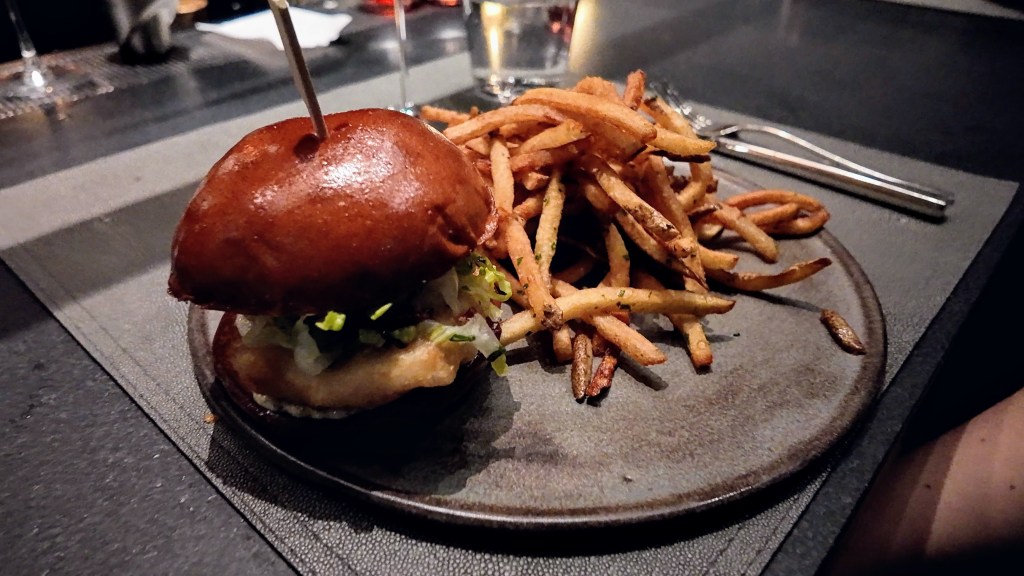

The Filet-o-Fish sandwich was exceptional. They serve it with their Canlis salad on top, so this acts as the textural compliment to the flakey fish and pillowy milk bun. $26 was also in the realm of a reasonable price for a high quality sandwich and a bed of fries. The French fries were heavily perfumed with truffle, and at 6mm thick would be classified as a “not quite shoestring” in my book. That’s about a quarter of an inch. They leave a lot of skin on the potato so you get a pleasant mix of crispy (almost bitter) skin, a light crust, and tender middle. Based on looks and texture I’m not convinced that this is a multi-step frying process, but I didn’t ask. My guess is that it’s a single fry with a cold water blanch, but due to them being fairly thin they’re able to achieve a crispy texture. However, I wouldn’t be surprised if there is a quick par-fry because this is a better crust than I’ve seen on most single-fried fries. Either way, they’re good but probably not the highlight of someone’s meal.

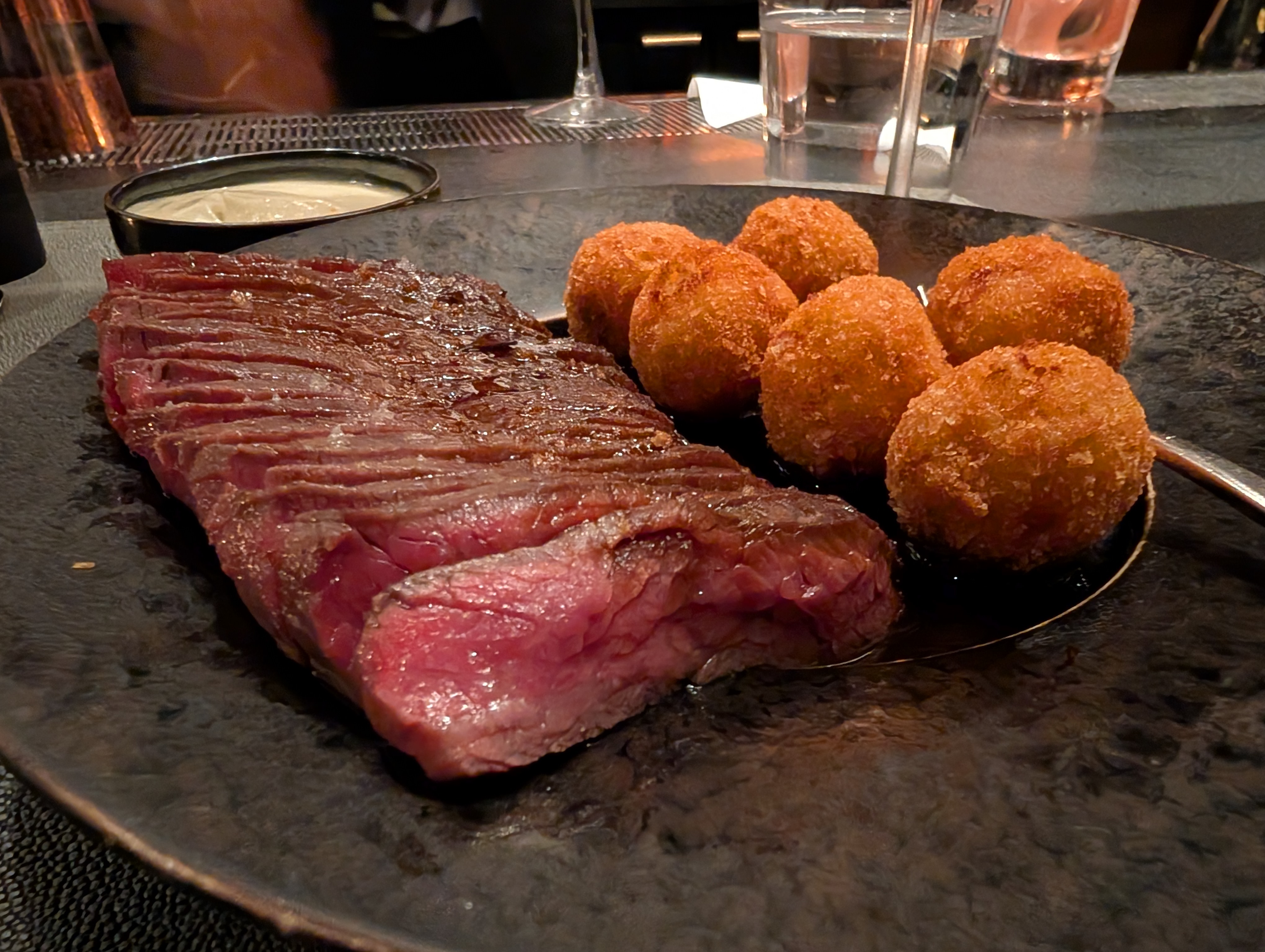
The steak frites exceeded my expectations by a lot. They use a 6 ounce portion of American Wagyu. Not sure of the specific cut, but it looked like it could have been bavette. No one asked me how I wanted it prepared, and that’s because they know how it SHOULD be prepared based on the marbling and tenderness. This was a beautiful steak. It lacks the hard crust that you’d expect to see on a fancy ribeye, but it was buttery soft and incredibly juicy. There’s an optional jus to pour over top and this enhanced the flavor considerably. It also added to the richness of the croquettes. The croquettes tasted like a fried version of the best mashed potatoes I’ve ever had and really benefited from the lemon aioli served alongside. That hint of citrus cuts through the heavy steak and potatoes entree enough to keep your next bite from weighing you down. $55 for this entree was extremely reasonable and might become an automatic-order the next time I visit the lounge for drinks.


The Drinks
Speaking of drinks, let’s talk about what I tried during this visit. These are all spirit-free cocktails, or mocktails, whatever naming you prefer. I’ve started leaning towards the generic label of “cocktail” because mocktail sounds a bit juvenile…or maybe just inferior to a cocktail. Canlis takes its non-alcoholic program very seriously and each of these drinks was conceived, tested, and prepared with the same craft as the rest of their cocktail menu. José Castillo is the bar manager at Canlis and was featured in a recent Seattle Met article. He took great care of me.
Casoni

The Casoni is similar to a Negroni and leans into the bitter family of drinks. This is very sophisticated and mature and falls into what I would classify as a conversational drink. You want something to sip, and the bitterness prevents you from drinking it too quickly. They use Wilderton’s Bittersweet Aperitivo as the base which is made from grapefruit, orange blossom, and herbs. That’s cut with Alta’s (Casamara) Amaro Soda which is a botanical based extra-dry soda. The addition of a purple corn syrup extract is an example of the bar’s creativity, and I think that this ingredient alone helps the Casoni avoid falling into the cough-syrup territory of other Negroni alternatives. The citrus and cedar garnish was another touch of elegance.
Satsuma Shrub

Going in a different direction, the Satsuma Shrub embraces a more vinegar and sweet citrus flavor combo. As a reminder, a shrub syrup is made by combining a choice of vinegar, sugar, and fruit. This is usually combined with soda water, and it’s a method of fruit preservation that goes back a long way. I only tasted a hint of the vinegar with how strong the satsuma came through in this one. It was sweet, but still light and balanced with a moroccan mint tea and ginger beer. This was quite a bit easier to drink than the Casoni, and a bit more fun. Maybe a bit more of a “gossip with the theatre moms” sort of vibe than the “brood in leather arm chairs” vibe of the previous drink. Fantastic stuff.
Purple Fog?

This drink (and the next one) weren’t on the menu, and this one didn’t technically have a name. José and I came to a gentleman’s agreement that it could be tentatively named “Purple Fog” because of the subtle hue from the purple corn in the drink and the foam on top. It borrowed this ingredient from the Casoni, and I think it used it in a more playful way. The drink itself was built on a caramelized pineapple syrup, sudachi (a small and mild Japanese citrus), lime, and ginger beer. José topped it with a purple corn foam that added a creamy sweetness. I loved everything about this one. If I’m ever in a position of absolute power, this is the drink that I would snap my fingers and receive from one of my 50 assistants. Bear in mind that this (and really any other drink) may not be available when you visit. However, I’m sure that there’ll be something else equally exceptional.
Solskinn
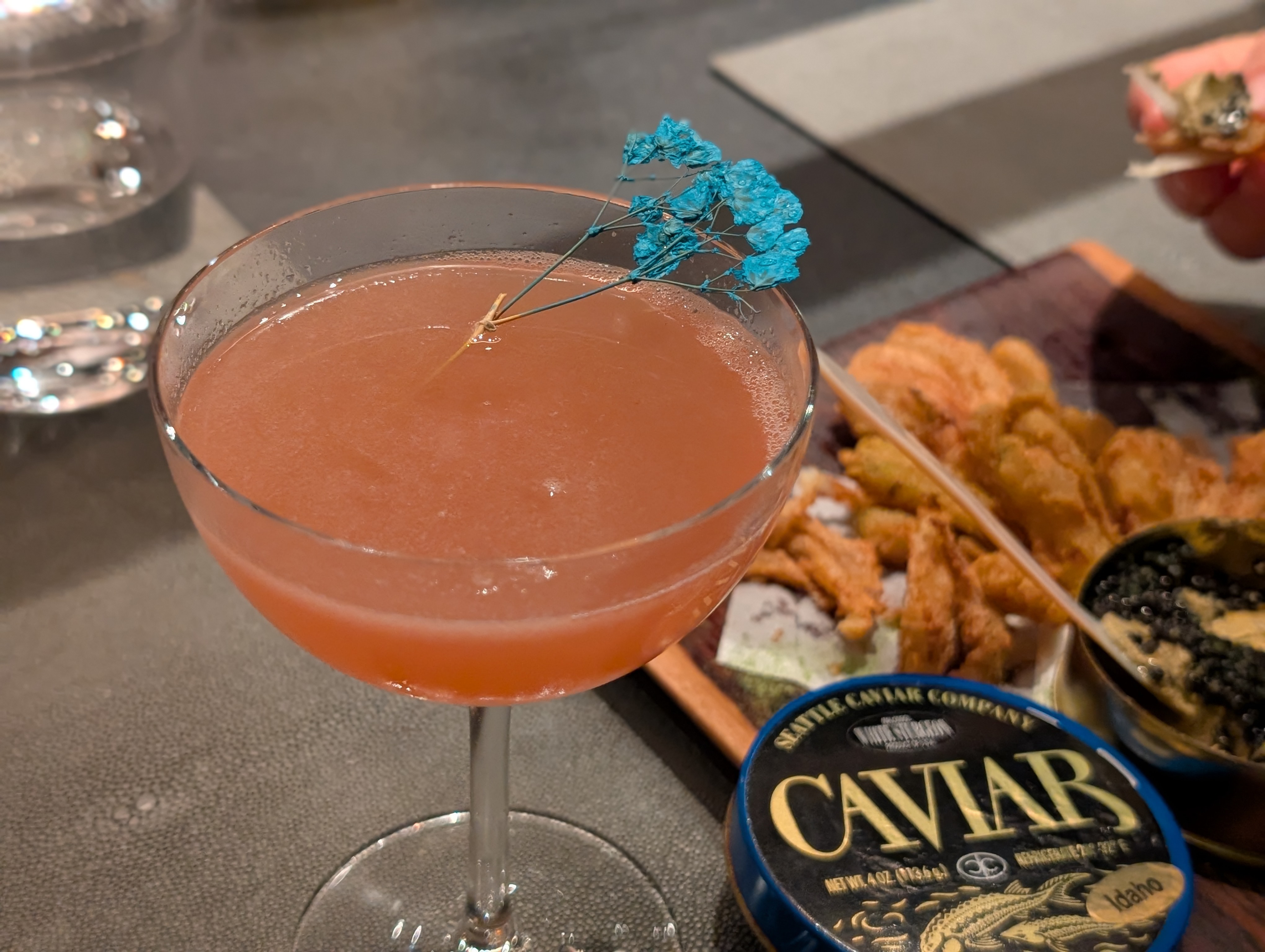
This was a recommendation from the bar team, and another one that wasn’t currently on the menu. The name comes from the Norwegian word for sunshine, and they had originally called it “Winter Solskinn”, but it’s a great drink anytime of the year so “Solskinn” alone is just fine. I don’t have all the details, but I do remember that it’s built off of common chai flavors including a heavy emphasis on cardamom. I believe there was also ginger beer to give it some sparkle, and some citrus flavors to balance everything out. It was amazing, and I wish I remembered more!


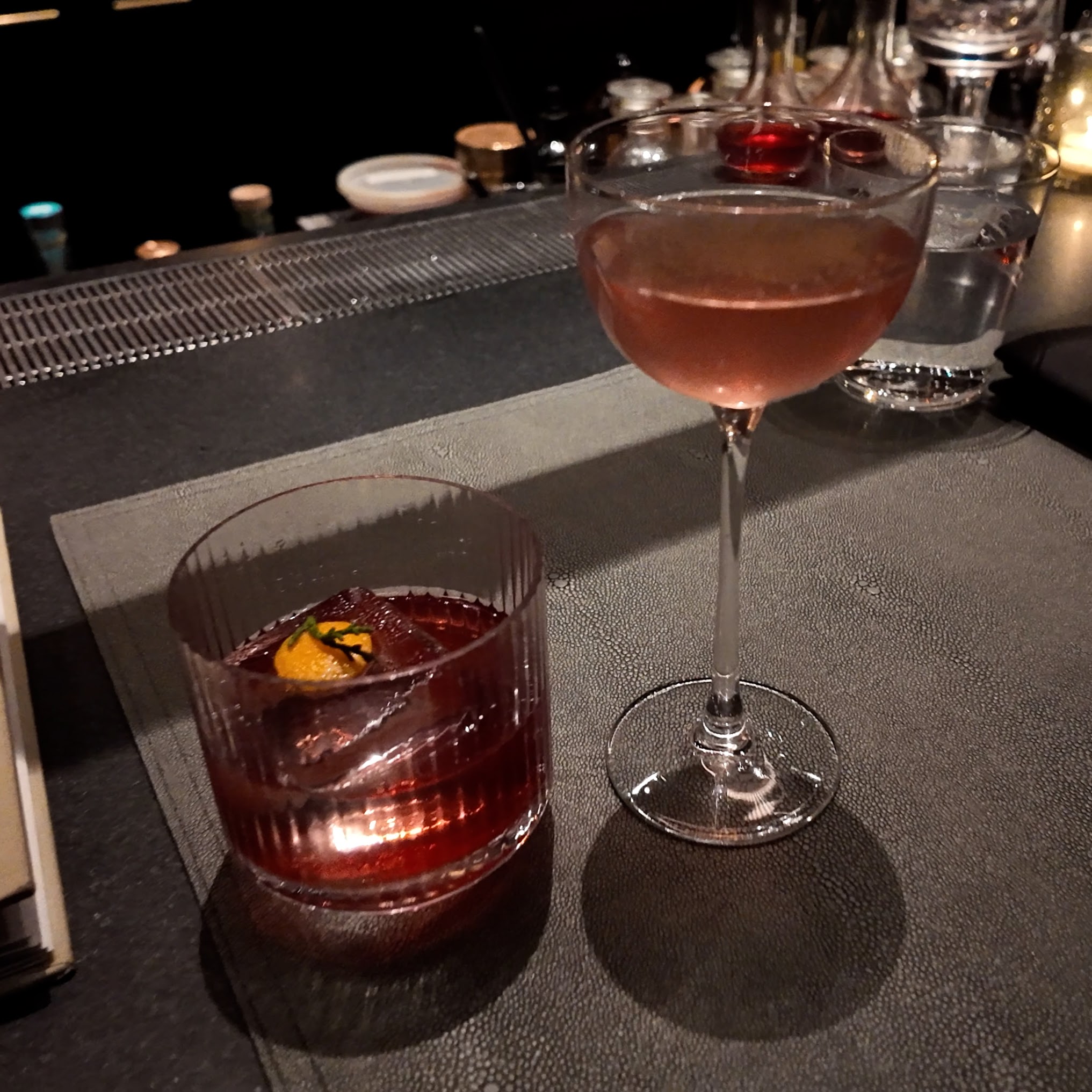
Summary
I had a blast. I know that $300+ for a dinner out is more than a lot of people can justify, but as a special occasion I believe that the experience measured up to the cost. The headliner of this visit was obviously the $125 “not-a-bloomin’-onion”, but that might be the first thing that I would remove from a follow-up trip. It’s not that I didn’t enjoy it, but it was a bit more of a novelty than a regular dining experience. I’m just thinking of the mountain of Scallop Toast I could have eaten for that same cost. I would strongly recommend grabbing a drink at the lounge with José or whoever is on duty when you stop by. Canlis is legendary, and if you’re anything like me you’ll appreciate a decadent meal while absorbing the ambiance from the beautiful architecture and hypnotizing piano performances.
If you do visit, please dress for the occasion. This isn’t Applebee’s.


Typo – a bad of cheese?Sent from my iPhone, typing
LikeLike
Great catch, thank you. Should have been “pad” of cheese
LikeLike
I bc was thinking bedSent from my iPhone, typing
LikeLike
You might be right. That sounds better.
LikeLike