
When people ask me what my favorite root beer is I will almost always tell them the same thing. “I don’t know”. Then I ask them to be more specific. If we’re talking about mass market, mainstream, big-brand root beer, then A&W is the pick. It’s a classic. The flavor is very smooth on its own, it stands up to ice cream in a float, and it holds some nostalgia for me because I grew up drinking it. Since the root beer was launched in 1919 I think it’s safe to say that A LOT of people grew up drinking it.
A&W has a fascinating history. Some of the strategic moves from 50 years ago have created incredible differences in what people around the world experience with the restaurant. I’m excited to share some of that story with you today, as well as my personal reaction to the their menus in both the United States and Canada. I made a video of the trip that you can watch on YouTube (see below), and I’d love it if you considered subscribing to the channel.
A&W Restaurants History
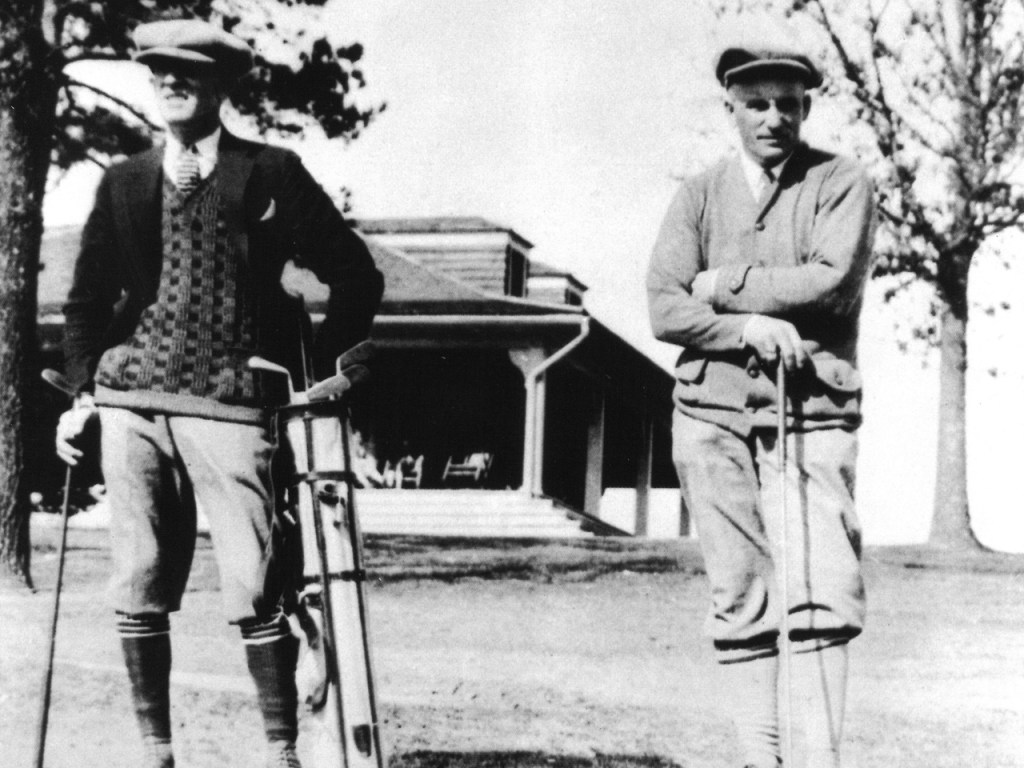
This isn’t intended to be an exhaustive exploration of the last 100 years, but more an overview to provide context into my fieldtrip. A&W started back in 1919 by Roy W. Allen (coincidence???) who set up a root beer stand in Lodi, California, to sell mugs of ice cold root beer during a parade for returning WWI veterans. Roy had impeccable timing because the temperance movement was gaining momentum and alcohol would become illegal in 1920. Root beer was one of the most popular alternatives, and Roy was able to expand his operation quickly over the following year. It didn’t become A&W until 1922 when he partnered with one of the root beer stand employees, Frank Wright. Allen & Wright (A&W) focused on growing the business in Sacramento as a drive-in restaurant. Frank Wright exited the partnership a year later, but the restaurants (and root beer) have kept the W from his name ever since. Their frosted mugs of root beer are iconic, and almost synonymous with root beer itself.
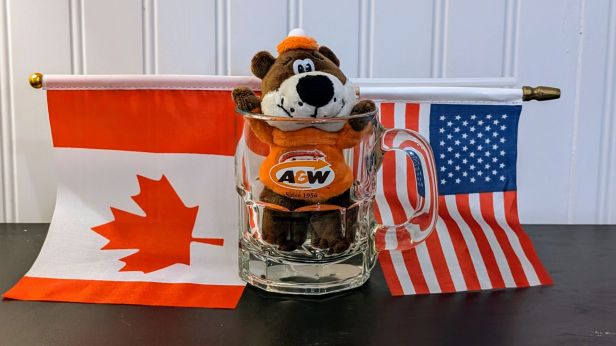
A&W became the first franchise restaurant chain in America. In fact, they had well over 100 locations by 1930 and grew tremendously during Roy’s leadership. When he retired in 1950 there were about 450 franchise locations. The company continued to expand both domestically and internationally with Winnipeg, Manitoba (Canada) as the first international location. In 1972 the Canadian franchises were purchased by Unilever and formally separated from the US and other international locations. In 1995 a group of the senior management purchased the brand from Unilever and continues to operate it as a private company to this day. Due to this unique history and ownership structure, A&W in the US is quite different from A&W Canada. The logo is similar, the menu is very distinct (A&W Canada actually kept more of the retro theme), and even the root beer follows a different recipe.


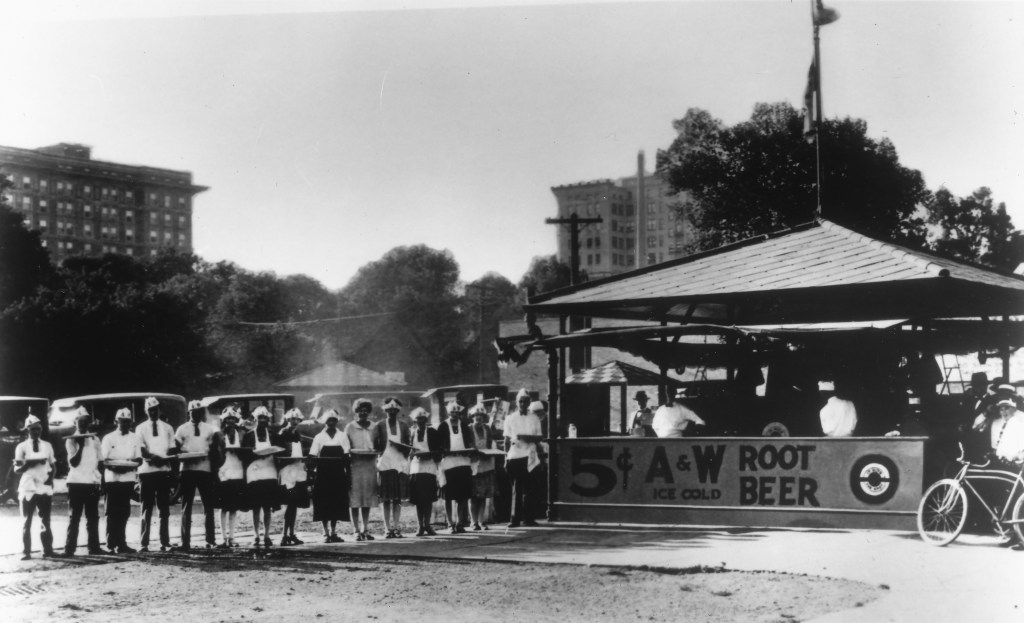

Publicly available data indicates that A&W has waned in popularity in the US over the course of my lifetime (somewhat). Their drive-in’s are often combined with a KFC or Long John Silver’s, and many don’t even supply the frosted glass mugs for root beer that have historically set them apart from other burger chains. The restaurants struggled after their acquisition by Yum! Brands in 2002 (Taco Bell, etc.), but a group of franchisees acquired the brand back from Yum! 9 years later and helped it start growing again. Based on my internet research, as of 2024 there are about 500 A&W locations in the United States. This is about 1.73 locations per million people which is about half of the density from back in 1950 when Roy retired (US population was 115 million, with 450 A&W locations). In comparison, there are about 40 McDonald’s locations per million people in the United States). While A&W is the United State’s oldest existing restaurant chain, it’s a bit of an underdog compared to the other players in the space.


In contrast, A&W Canada (A&W Food Services of Canada Inc.) is incredibly popular. They’re the second largest fast food chain in Canada (behind McDonald’s) with over 1,000 locations (about 27.03 locations per million people). This begs the question, what is so different about these restaurants in Canada?? I only live a couple hours from the Canadian border, so I decided it was time for me to highlight some of these differences on the blog in as direct of a comparison as I could. This meant that I visited the northern-most A&W in Washington state (Bellingham), and then immediately crossed the border and visited one of the southern-most A&W’s in Canada (White Rock). It was a long day, but very enlightening.
A&W USA – Bellingham
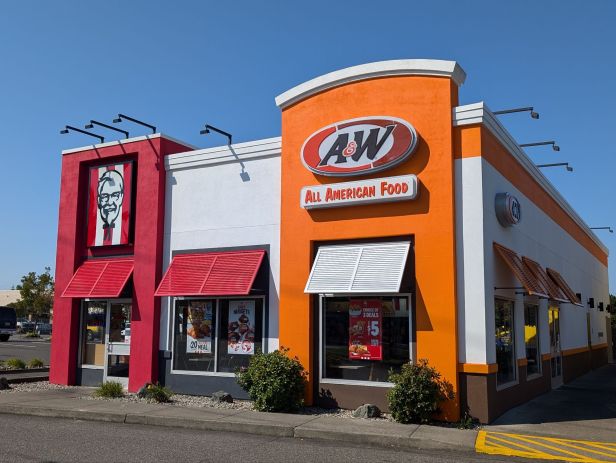
The Bellingham location was one of the shared KFC/A&W concepts that are prevalent in my part of the country. While the location was clean, and the employees were friendly, I was disappointed that the root beer was served in standard paper cups instead of reusable frosted glass mugs. I discovered later that they sold glass mugs, but they clearly warned me that it would need to be washed before use. Oh well.


The US menu keeps one relic from the past. The Papa Burger. Their burgers used to use family names to identify the different options. Papa Burger, Mama Burger, Teen Burger, Grandpa Burger, etc. A&W Canada kept this, or maybe resurrected it at some point. The US restaurants abandoned the Burger Family in the 1970’s when they introduced Rooty the Great Root Bear. The different names of the burgers represent different sizes and toppings. I can’t understand the logic behind it, but the USA Papa Burger is two 1.5 ounce patties with some standard toppings and sauce. No bacon. The Papa Burger in Canada has two 3 ounce patties, regular burger toppings, and “Teen Sauce”. The US location sells a Double Bacon Cheeseburger, and this correlates very well with the “Teen Burger” at A&W Canada, so that’s what I used as my test order. I also bought several sides. At the Bellingham location I settled on regular French fries, Deep Fried Cheese Curds, and Chili Cheese Fries.

The burger was surprisingly great. I went in somewhat pessimistic because I’ve had bad food at other locations in the past, but I think that’s more a product of laziness of the employees rather than the quality of the concept. The patties were juicy and very well seasoned. All the vegetable toppings were fresh and bright, and the ratio of meat, cheese, topping, and bun was spot on. This reminded me a bit of an In-n-Out double-double. I washed it down with a root beer, and while it wasn’t in a frosty mug, it was still sweet with a caramel/vanilla body. I’m confident that they increase the concentration of syrup for the root beer in the store because the bottled stuff isn’t this good. I discovered later that each A&W restaurant makes the root beer fresh in house. When I dug deeper to find out what that meant, I learned that they mix water, sugar, and root beer concentrate together in a large enough batch to last through the day (or up to a few days).


The French fries I tried were probably KFC fries. A bit on the thicker side with a very light battered coating. Whatever seasoning they used was fantastic and I found myself going back and back for more. Very crispy on the outside and almost mashed potato on the inside. The Chili Cheese Fries used the same fries but smothered them with a scoop of chili and some sort of gooey cheese product (either American cheese or Velveeta). Again, these were outstanding. My expectations were low, but the chili had a lot of zip to it (not spicy, but spiced), and the cheese was a perfect compliment. Those two elements combined with great fries created an awesome side. The cheese curds sucked, though. I love cheese curds, but they’re heavy. After eating so many other interesting and balanced items in my order, these just tasted one-note, and that one note was “grease”. Maybe they’d have been better if I had a tangy dipping sauce. I should have asked, but if it didn’t come with it natively then I thought it was fair to leave it out.

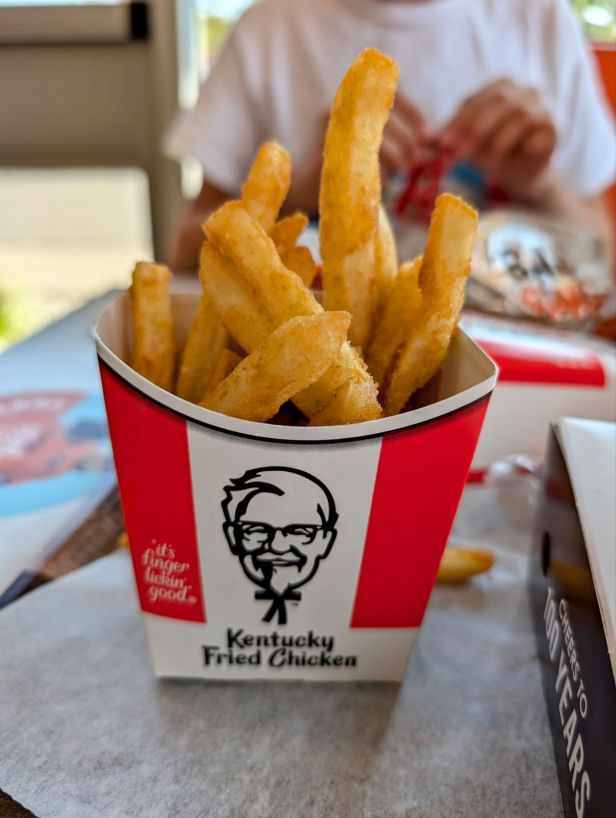


Overall, my meal at A&W in the USA was pretty great! I threw my leftovers (about half of each item) into a cooler and headed north to visit A&W’s Canadian relative.
A&W Canada – White Rock
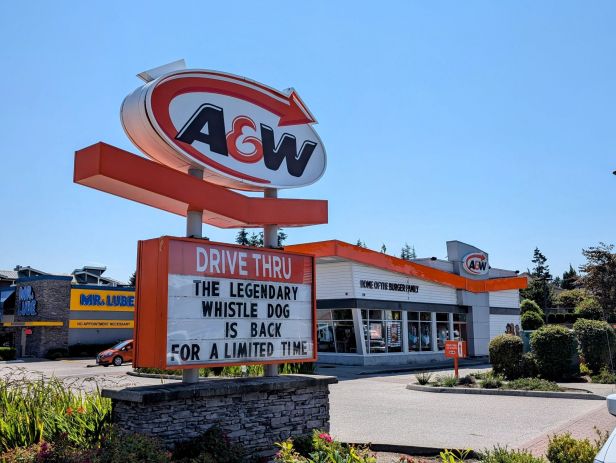
There are a ton of A&W locations in British Columbia. 190, if you believe the internet. There were some so close that I could have comfortably walked between them in less than 10 minutes. The first location I visited was actually inside of a food court (I didn’t do my research well enough), and it had a limited menu, so I drove another 5 minutes and found another. This time it was a proper stand-alone drive-in and had everything we needed.


The building itself is very retro themed. They have “the burger family” on the outside wall representing where the burger names come from. The booths are clean, the lobby is big, and there are large quotes about the chain’s history on the walls. I saw a cooler of frosted mugs behind the counter (-15 Celsius, or 5 degrees Fahrenheit), and little stuffed “Rooty” the Great Root Bear mascots. He was introduced in 1973 and used by both the US and Canadian companies (with small differences), but the United States discontinued Rooty for a brief period between 2000 and 2011.
Again, A&W Canada uses the burger family names. I asked the employee to explain to me what the difference between a Papa Burger (with 2 beef patties) and a Double Teen Burger is, and I didn’t get a great response. The Teen Burger has bacon and a different sauce is what I figured out online. Personally, I find the menu confusing because it’s all in fairly small print, nothing is described in any sort of helpful detail, and the menu is expansive enough that the monitors have to cycle through other products. There are chicken burgers, Piri Piri Beef Burgers, various wraps, a brew bar, and some locations even serve breakfast (it looked really good). I kept on task and ordered the Double Teen Burger (mistake) so that I could have the closest comparison to the American counterpart. For my sides, I got an order of the regular French fries and then an order of poutine. Of course I got a large frosted mug of root beer.
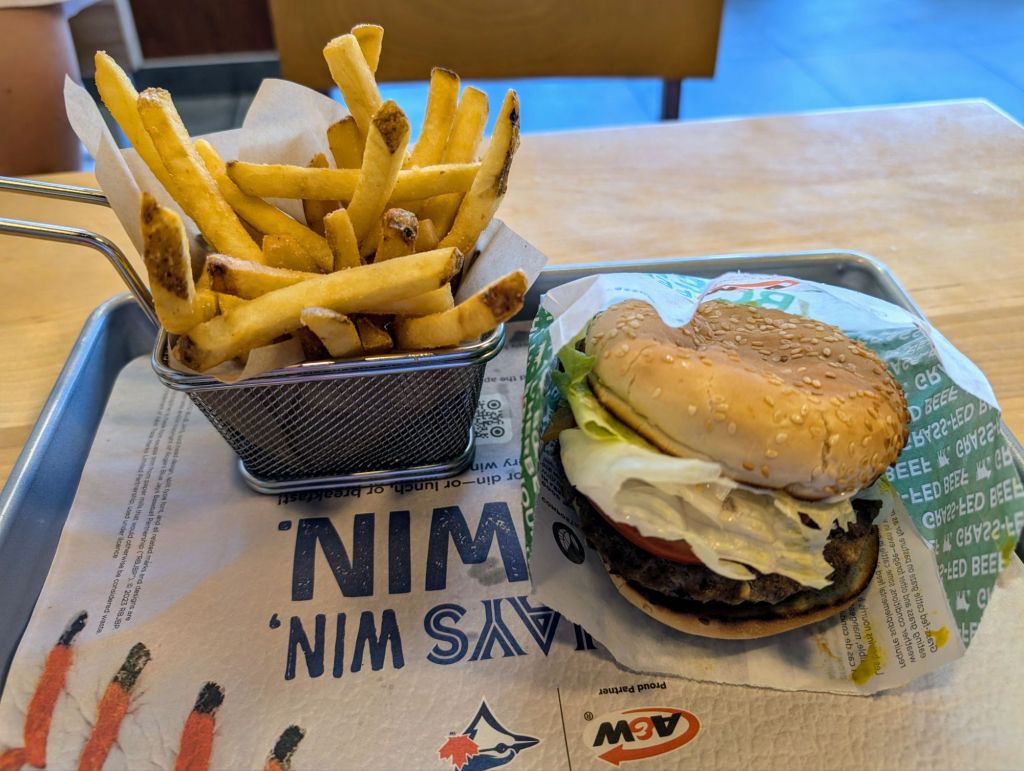
A&W Canada boasts about the quality of its ingredients. Fresh beef, house made onion rings, etc. The Double Teen Burger certainly looked fresh, and overall it was a good burger. But…it wasn’t great. Their patties were thicker and narrower than the American patties, so that means that the burger becomes taller. It also makes it harder to homogeneously season the patty. When you stack two thick burger patties on top of each other, you’re going to taste a lot of beef, and it’s challenging to compliment that with the other sauces and components. To me, it felt dry and imbalanced. After getting home and doing a bit more research I discovered that the American Double Bacon Cheeseburger has 1/3 pound of beef TOTAL, and that each Teen Burger patty was 1/3 pound. So, I had twice the beef on the Canadian burger. That’s my fault, and I should have kept it as a single patty burger for the closest comparison. While I preferred the American burger, I believe the Teen Burger would have been better if it was only one patty. That doesn’t change my opinion that America cheese is superior to cheddar on a burger, and having two slices of cheese in between smaller patties produces a better result than one slice of cheese on one larger patty. Still going to give the USA a win for the burger.

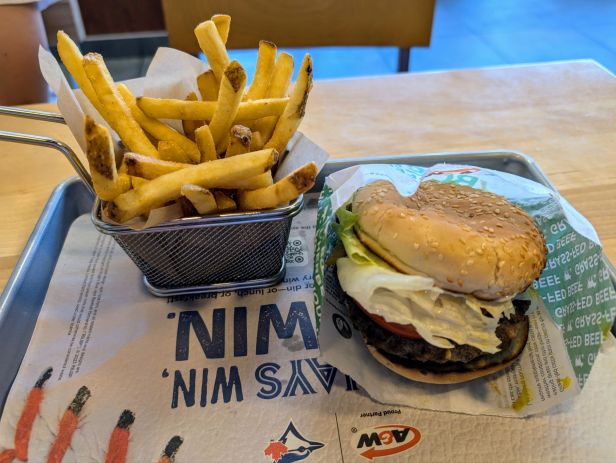

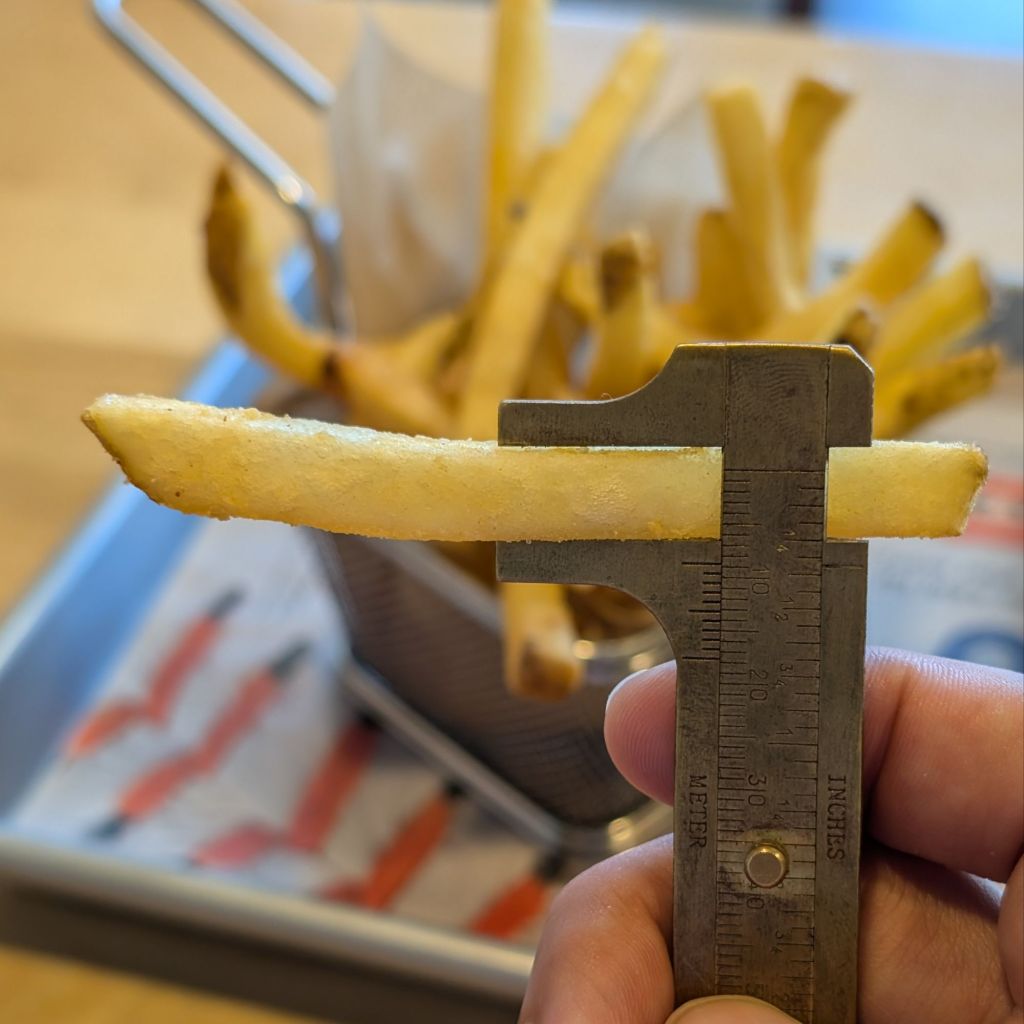
The fries are totally different. The Canadian fries are a clean medium thick Russet with the edge skins on. These were fried exceptionally well, and seasoned almost perfectly. However, I couldn’t taste any of that signature “A&W Seasoning”, and maybe I needed to ask someone for it? The American fries had more flavor, but these Canadian fries were still good. The poutine tested their durability after smothering the fries in gravy and fresh cheese curds. The gravy was nice and salty, the cheese curds were that perfect half-melted consistency, and the fries quickly turned into mush (as expected). They were awesome! I think it was also the right portion of poutine. It was small enough that you could finish it before the fries became total goo. Would I rather have the Canadian poutine or the Chili Cheese Fries from the US? Don’t make me choose, it’s unfair. I’d like to live in a world where I could have both.


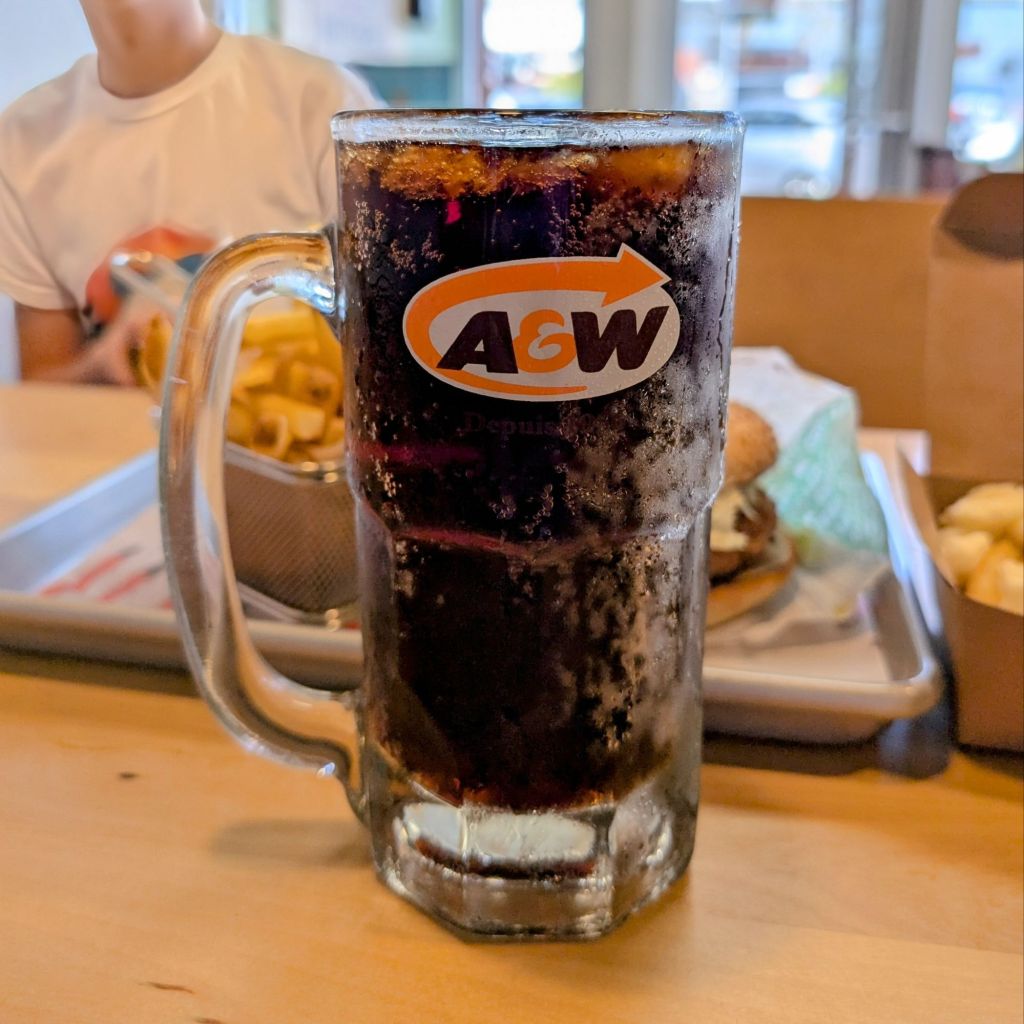
The root beer was fascinating. How much does the frosted mug increase the experience? More than zero, that’s for sure. The mugs are cold enough that they create a thin layer of frozen root beer on the surface. Outside of that novelty, the flavor was a bit different than the US recipe. They use cane sugar in Canada for the root beer, and it comes through as a deeper caramel flavor that lingers on the palate. They also use cane sugar in the USA restaurants (not in the cans), but it wasn’t this caramel forward. I didn’t taste as much vanilla as I did with the US variety either, but I enjoyed how creamy it felt. Maybe they just use more sugar? Beyond the cane sugar, they also use sarsaparilla root, birch bark, licorice root, and anise as natural flavorings (no mention of vanilla at all). This gives it a more “spicy” flavor, but I’m not sure if that’s due to the absence of the vanilla or the heavier presence of the roots/barks.

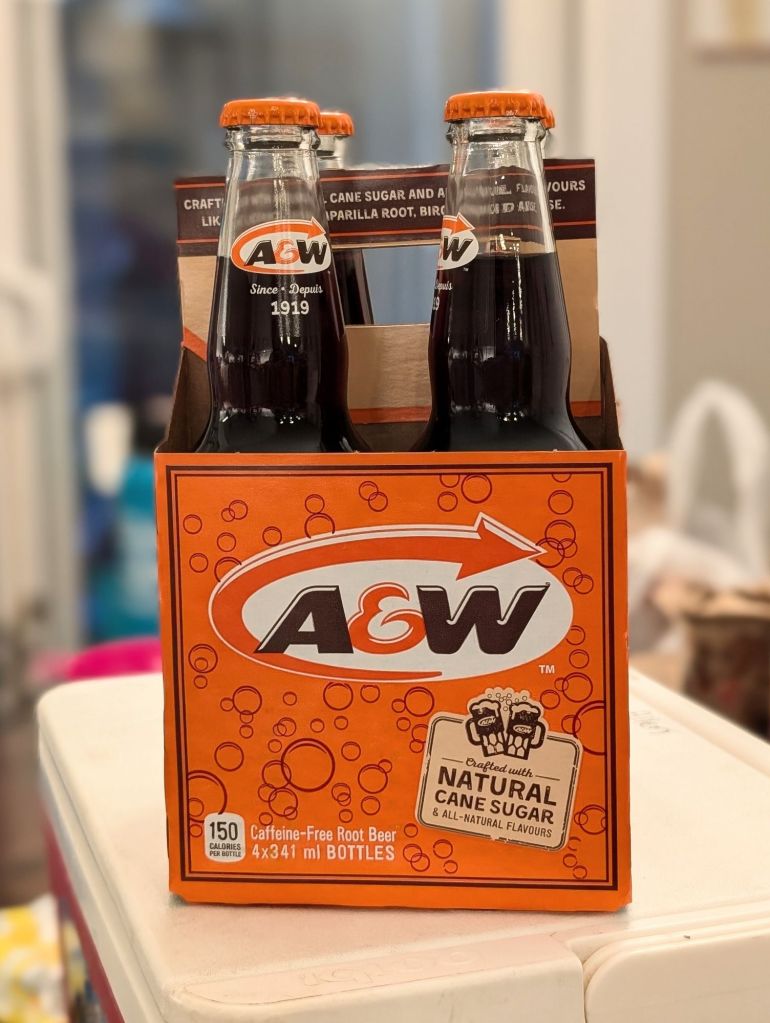
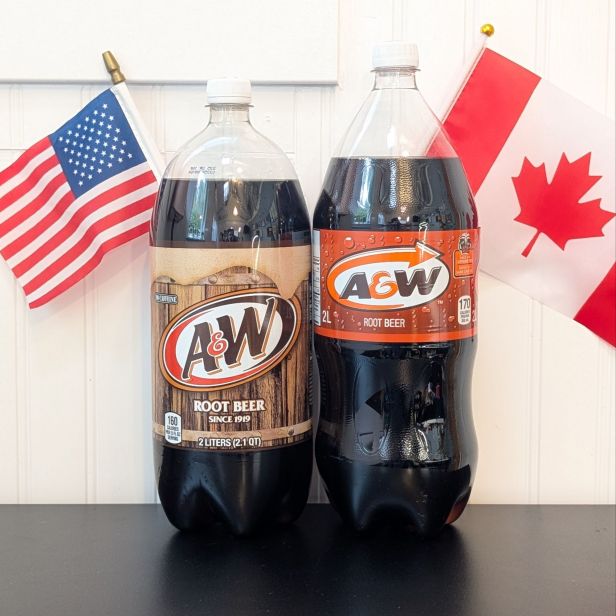
I had filled up a thermos of the root beer from Bellingham and was able to try them head to head, and it was clear that the Canadian variety was better. I even brought along a bottled A&W root beer from the US, and that was the worst of the three. It tasted watered down, whereas the Bellingham fountain one was much bolder and pronounced. Still, the smoothness and depth of the Canadian root beer won my heart. Later in the day I tried a frozen root beer with sweet cream and that was just a step too far (so. much. sugar.), so next time I’ll know to proceed a bit more conservatively.
One additional note about the root beer. A&W used to advertise “Made with Aged Vanilla” on their cans. This was apparently false advertising and A&W lost a class action lawsuit a few years back (Link). I couldn’t find evidence of real vanilla extract in the modern ingredients, but from my research online it’s a synthetic ethyl vanillin.
Conclusion
I need to reconsider A&W as a top tier fast food option in the US. I don’t have one close to me at the moment, but after this experiment it could very well enter into the rotation of choices during future road trips with the family. The food at both the US and Canadian locations was great. While the Canadian root beer was clearly my favorite that doesn’t mean that the USA root beer is bad. I really appreciated learning about the history of Roy Allen and the A&W Restaurant chains. My next project is to see if I’m related to Roy and what it takes to get invited to the next family reunion.
Side Quest – Visit Point Roberts
I’ve wanted to visit Point Roberts for a long time, and this trip ended up being a reasonable excuse to make that happen. For those that are unfamiliar with Washington State geography, Point Roberts is a small pene-exclave that belongs to the United States, but it’s entirely cut off from the mainland by the land border with Canada. This wasn’t an accident, and back when the borders were drawn with the 49th parallel, the US wanted to keep this land for strategic purposes. To access Point Roberts you either need a boat, a small plane, or to drive through Canada for about 30 minutes and cross over the border again.

Kids that live in Point Roberts have an interesting challenge for their school education. There’s a primary school that offers kindergarten, First, Second, and Third grade lessons. Everyone else takes a 40 minute bus ride (each way) across two borders and into Blaine, Washington. While there aren’t a lot of kids, it’s still a very unusual schooling experience.
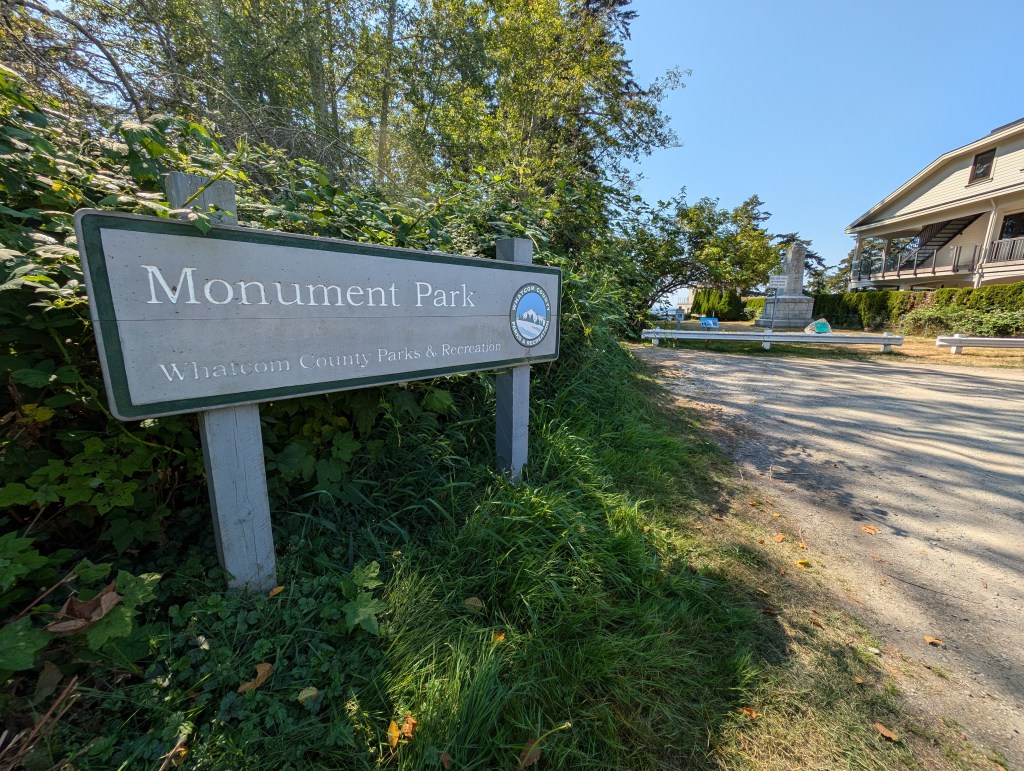
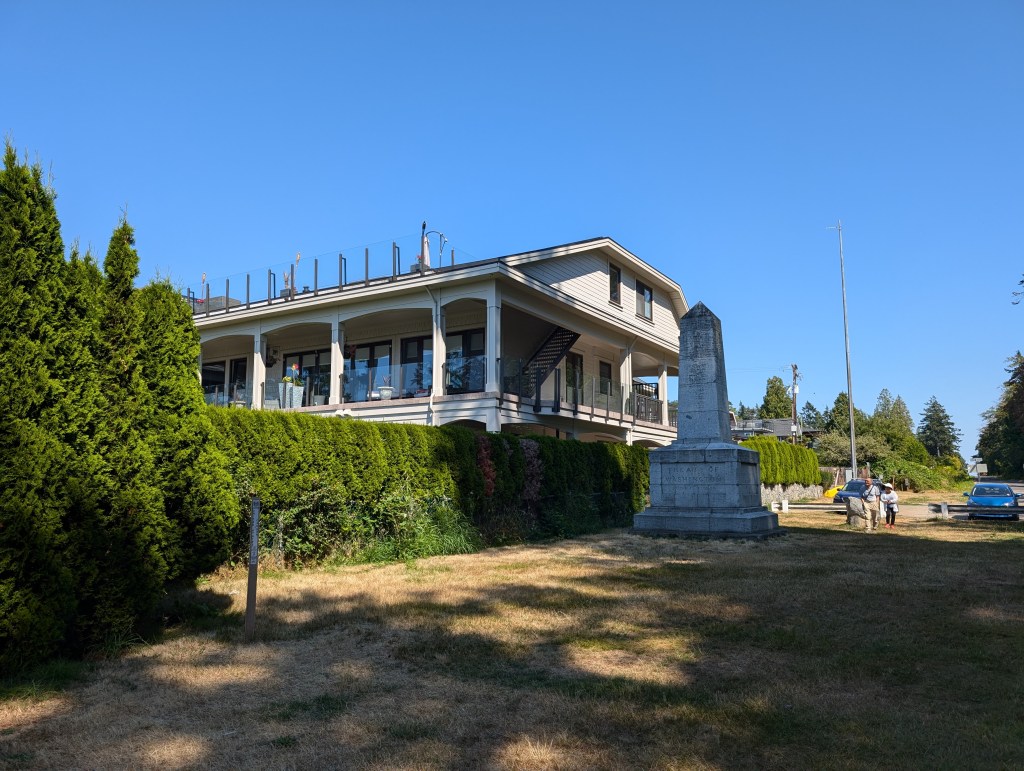
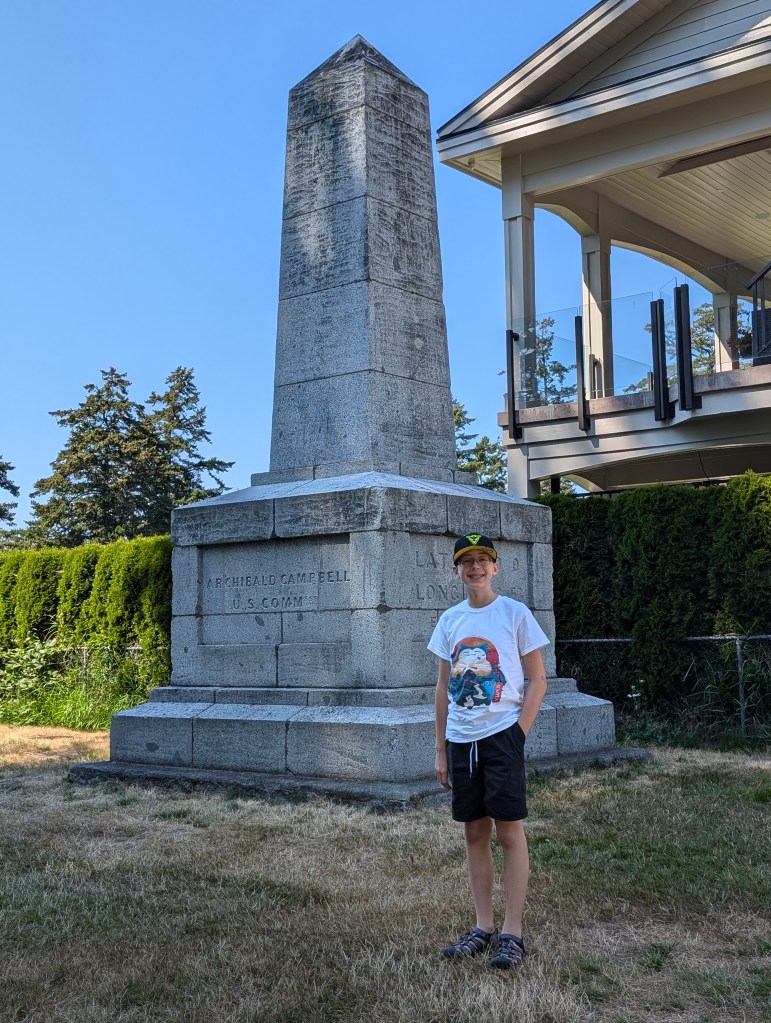
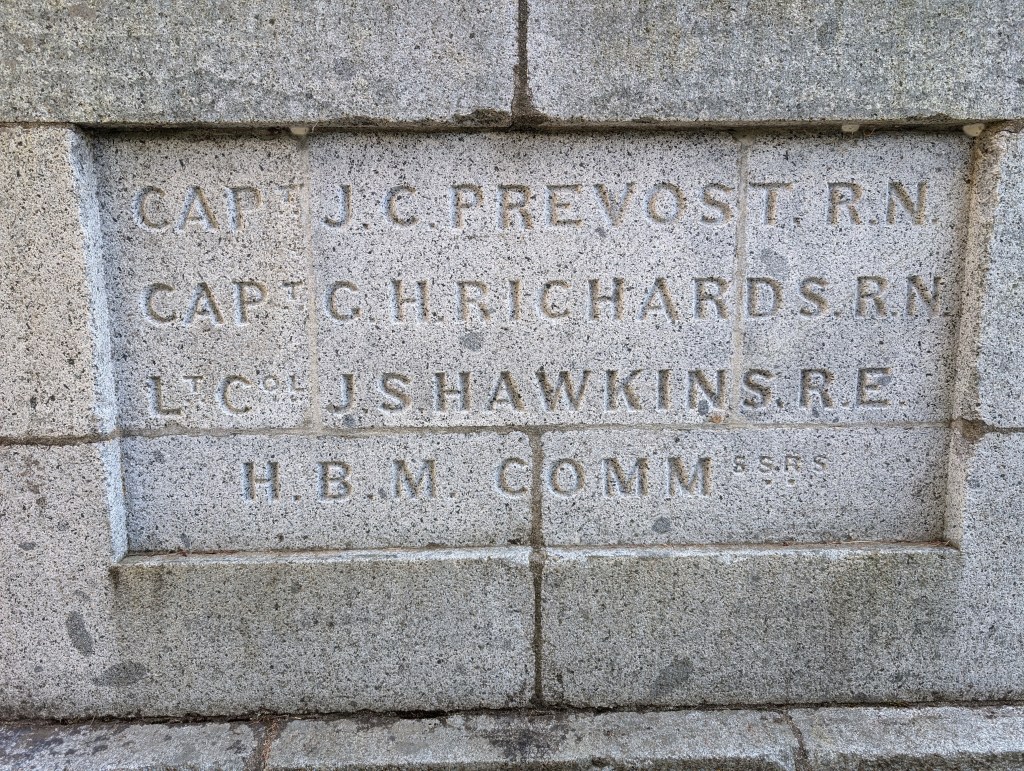
We kept our visit brief, but we made sure to stop at Monument Park to snap a photo with the Monument Marker #1 across the US/Canada border. It was installed in 1885 and is basically sitting in the backyard of a Canadian’s house. I managed to quell my intrusive thoughts and DID NOT JUMP OVER THE SMALL YELLOW CURB TO ENTER CANADA ILLEGALLY. Very surreal. We also visited The Rubber Duck Museum which sits in a back room of a gift shop in the middle of town. There were a couple of display cases of old rubber ducks, hundreds (maybe thousands) of rubber ducks and rubber duck merchandise for sale, and one random tourist popping in to politely ask if they sold mushrooms. That last part is probably not a typical experience, but it was my experience. I bought a t-shirt and some ducks and headed back to Canada so that I could head back to the United States.
 Sodafry
crazy that you prefer american cheese over cheddar and thought there was too much meat on the canadian burger. To me the perfect burger has 100% real cheese with no added milk products. And bigger patties are awesome! I’m tired of all the tiny burger patties that make a double the equivalent of a single. The lettuce in particular is my favourite at canadian a and w locations. Their chicken burger is good too, tastes like real good chicken.
LikeLiked by 1 person
I get it, we all have a preference. I like American cheese on burgers, but that’s the only place. As far as the patties, that was my fault. Single patty would have been right.
LikeLike
Next time you are at A&W Canada make sure you try the onion rings! They are the best thing on the menu, and best onion rings period.
LikeLike